State of Web Browsers for Your G5

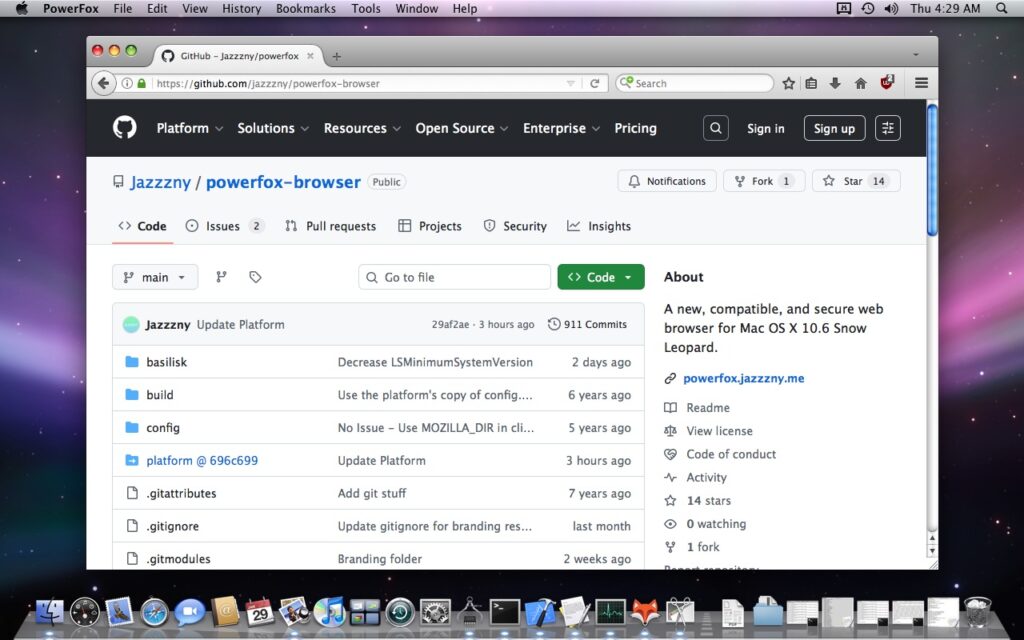
A screenshot of Powerfox, a browser for PowerPC

Hello, dear readers.

If you are like me and your PowerMac G5 is sitting under your desk, waiting to be used, one of the remaining critical questions in this internet age is whether or not it is safe or workable to access the web on our aging machines.

The short answer is yes.

The history of web browsing after Mac OS X 10.5 and PowerPC hardware hit the unsupported hardware list is not particularly long. Firefox kept us in the mix for a time, but when it and a custom build of WebKit for Leopard faded, TenFourFox, by the wunderkind Cameron Kaiser, emerged as a capable and foundational piece. Unfortunately, he had to shift his energies as Firefox kept changing and the fixes got more complicated.

InterWebPPC (by wicknix) took up the mantle for a time, making changes and compiling newer versions based off of the TenFourFox code, until even that was untenable.

In more recent days, you can find two somewhat current options:

Aquafox picks up on the foundation of TenFourFox to maintain a fairly secure and workable solution. It is built off of the remains of InterWebPPC and based on Firefox’s ESR (Extended Security Release). The code therefore is not the latest and greatest, but it is intended to be usable. It’s a gift — even if it shows its age.

The newest addition to the browser possibilities is PowerFox. PowerFox is not based on TenFourFox but on the UXP framework, which itself branched off from an early version of Firefox. You can find Intel versions under the Basilisk name to give a spin, if you are curious about this branch. It’s an intriguing development because it is the first new-ish browser that isn’t just keeping secure and safe internet access barely hanging on from the carcass of TenFourFox. Of course, it’s in beta, which means it has bugs. On the plus side, it is designed for Macs running Leopard and Snow Leopard.

MacForums has a wonderful thread of conversation and bug reporting as folks give it a spin and test its capabilities against the modern web. PowerFox is not going to work miracles, of course. 4k videos are not going to play on your PowerMac G5!

This is good news, and expect a more thorough review of PowerFox as my G5 gets fired up.

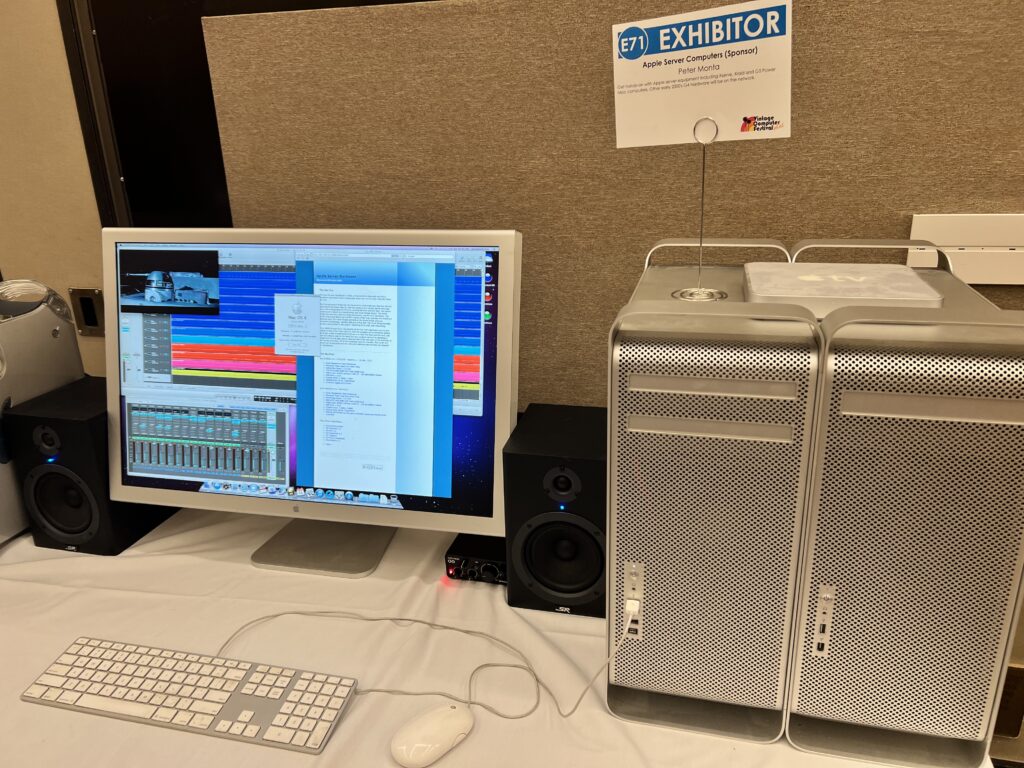
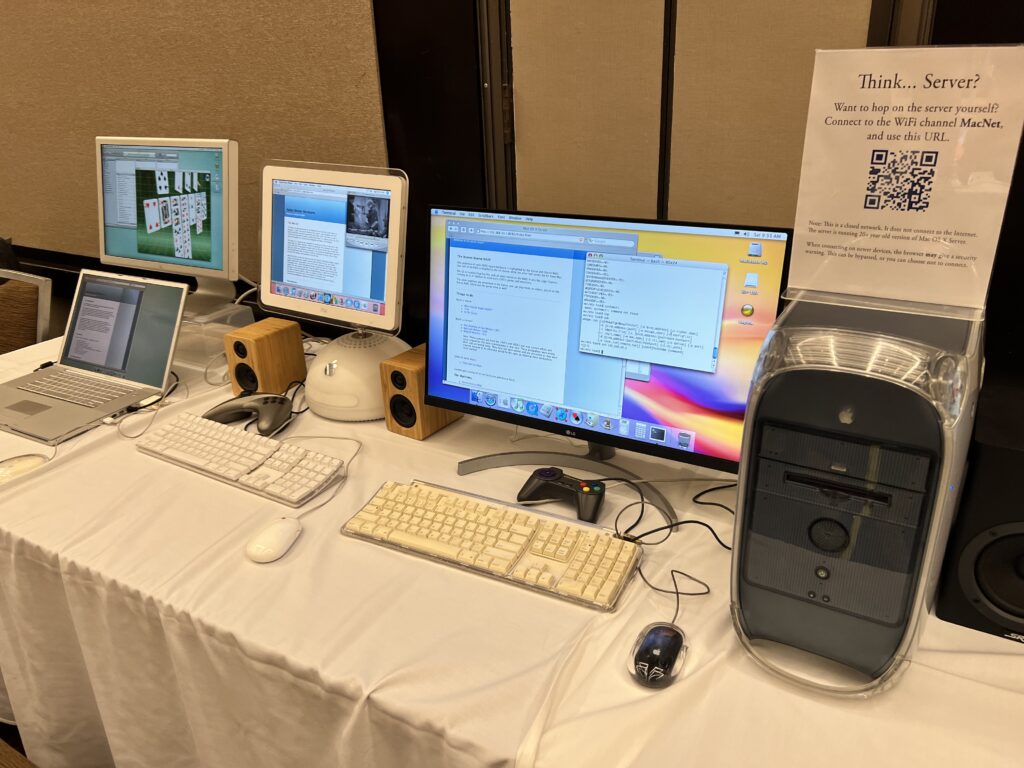
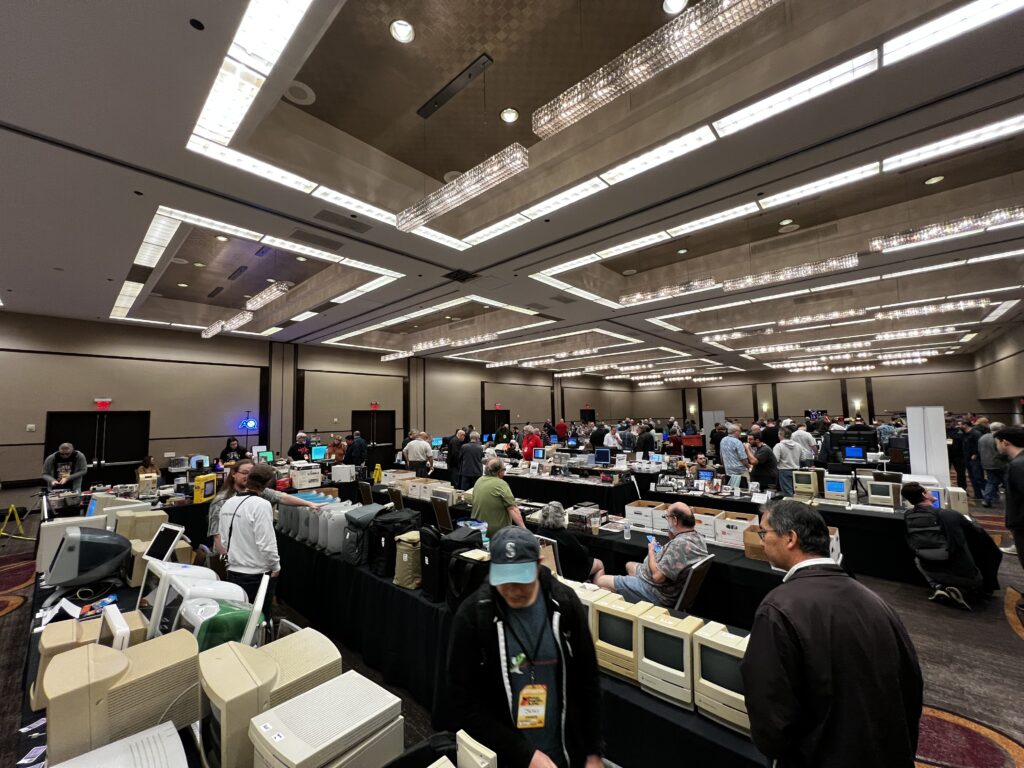
By the way, if you are at Vintage Computer Festival SoCal, come find me and say hello.

— Nathan

Mavericks Forever?

Happy New Year!

While this isn’t a post related to my PowerMac G5, still sitting close by waiting to be booted in a day or two, I have been intrigued to give Mac OS X Mavericks a try recently on an older Mac mini (2014).

Why Mavericks? The author of the excellently put together Mavericks Forever website makes a case that he simply wasn’t interested in what the modern MacOS experience was providing and found Mavericks a cozy balance between past and future:

  • Speed. Mountain Lion was noticably slower than Mavericks on the same hardware, particularly in memory-constrained environments. Mavericks supports memory compression, and it makes a big difference! 
  • Aesthetics. Mountain Lion borrows many visual elements from early iOS, such as its linen-clad Notification Center and leather-bound Contacts app. I wanted a computer, not an iPhone. The Contacts app in Mavericks is actually closer to the one in Snow Leopard.
  • App Compatibility. Mavericks supports more recent versions of apps like Affinity Photo and VMWare Fusion. iMessage works on Mavericks, as does Zoom. By contrast, I’m not aware of any software that works on Mountain Lion but not Mavericks.

The website provides a detailed process to prepare, install, slim down, and stock your older Mac with everything it needs to get on the net and enjoy a more austere Mac OS X experience.

While it took a small amount of finagling, I decided to take the plunge and turn my old Mac mini with 16GB of RAM and 2TB SSD into a Mavericks server. Instant reaction? It’s fast. Very fast. With a legacy version of Firefox, recently updated, I can browse the web with speed. There is little clutter – it feels good.

What are the downsides? Theoretically, just like our G5s, security holes that have not been patched will remain unpatched. Using older software brings those same risks.

The only major disappointment I encountered is rediscovering that Mavericks will simply not recognize a non-Apple SSD on an old MacBook Air. I forgot that High Sierra was the inflection point that opened up wider SSDs and TRIM support on many laptops with proprietary connections. However, I like this setup enough that I may install the original SSD and see if my MacBook Air running Mavericks can make a small but capable daily driver in 2026.

Anyway, enjoy!

And yes, planning to hit VCFSocal in February.

— Nathan

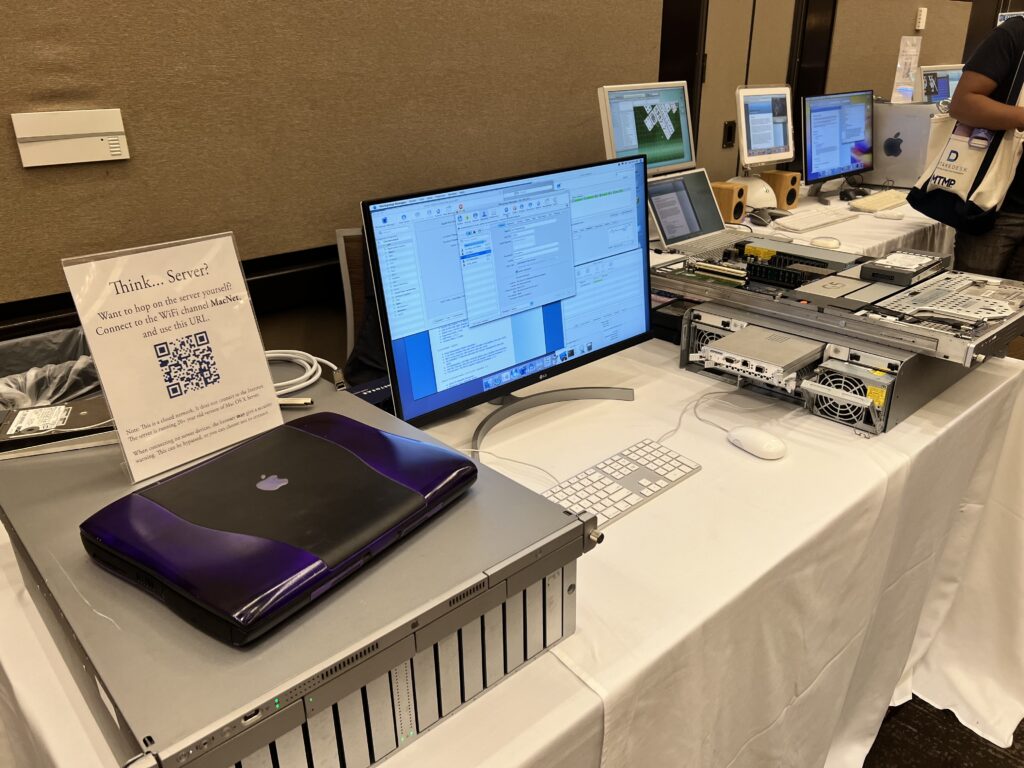
I’ll be at Vintage Computer Festival SOCAL.

Happy Friday!

Tomorrow, I’ll head up the road and check out Vintage Computer Festival SOCAL. I’ll plan on posting a few photos from intriguing things at the event. I’ve noticed a guy with a multi-colored variety of the classic hinged iBooks will be on hand to show them off. I can’t wait.

I’m also going to be glimpsing any Apple IIGS related gear as well as options to continue to tweak my Mac SE/30, inherited from my dad.

Are you going to be around? Maybe we could grab lunch and chat G5s or old Macs?

Stay tuned.

— Nathan

This site is frozen.

Hey fellow G5ers.

This point of this post is that I don’t foresee many updates to the website moving forward.

While my PowerMac G5 traveled with me from the east coast to west coast during a recent move, I have yet to fire it up and decide how to proceed. Some of the information on the pages has begun to become out of date. In some ways, our G5s are less viable as ever as a daily computing platform, but with a Mac Mini M1/M2 under $500, we are really in a golden age of affordable, super fast computing.

I love PowerPCs. This G5 is a beautiful machine. It has served me well.

But times change. Technologies march on.

We’ll see what lies ahead, but for now, this website is “frozen”.

Peace, Nathan.